Introduction
Choosing lace should feel simple, not scary. This guide explains the key points in clear steps. As a result, you can pick fabrics and trims with confidence. We will also show quick tests you can do in the studio. Finally, you’ll get sourcing tips that save time and budget.
For a brief background on lace itself, see the history summary on Wikipedia. It helps you tell Chantilly from guipure at a glance.
1) Start with the dress design
Before you touch any fabric, define the look. Then the lace choice becomes easy.
- Silhouette: A-line, mermaid, or ball gown.
- Coverage: Full overlay, bodice only, sleeves, or hem.
- Mood: Airy and romantic, or bold and graphic.
- Venue & season: Summer beach vs. winter ballroom.
Next, set a primary lace (for the main area) and a supporting lace (for trims, straps, or hems). This mix keeps the dress balanced and cost-effective.
2) Know the main lace types (quick chooser)
Use this as a short cheat sheet. Therefore, you can match look to material in seconds.
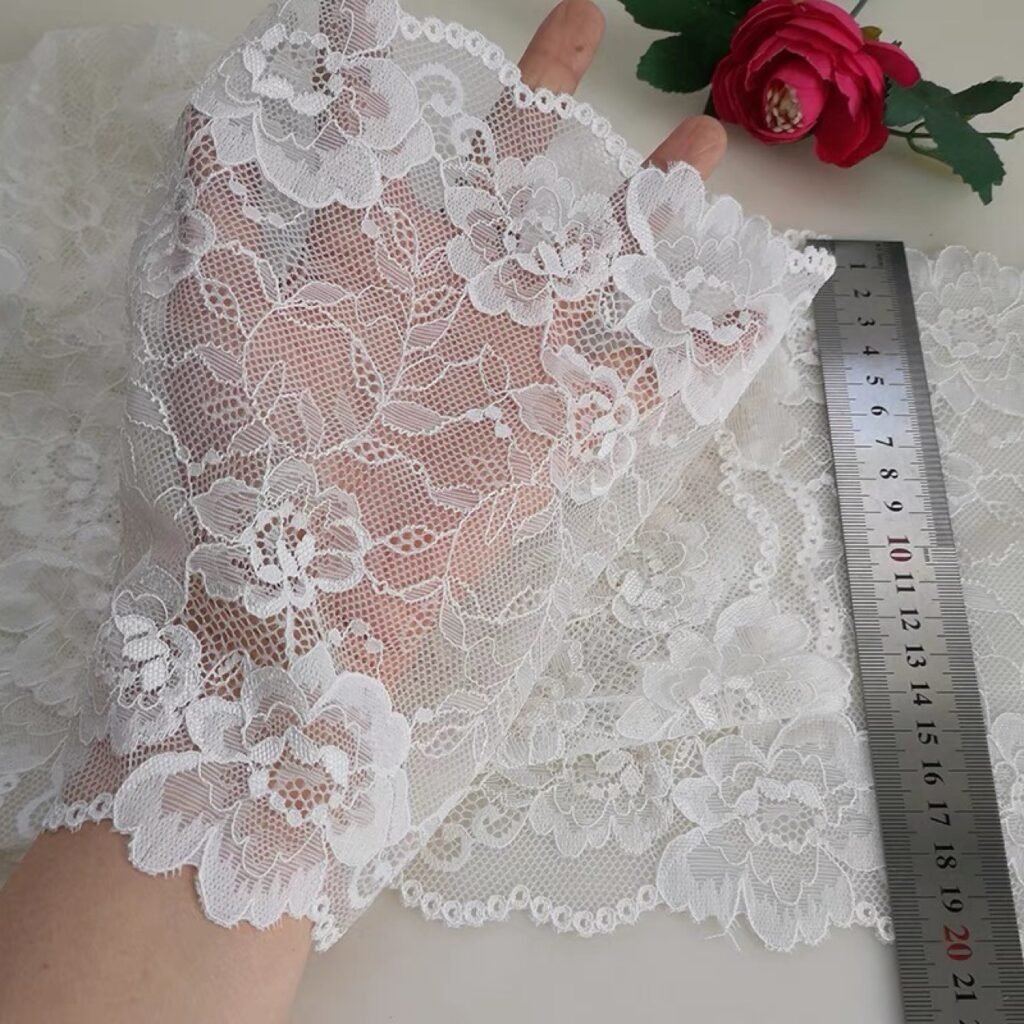
- Chantilly: Ultra-fine net, soft drape, delicate florals. Best for overlays and airy sleeves.
- Guipure / Venise: No mesh; motifs linked by bars. It feels structured and looks bold. Great for defined hems and sculpted bodices.
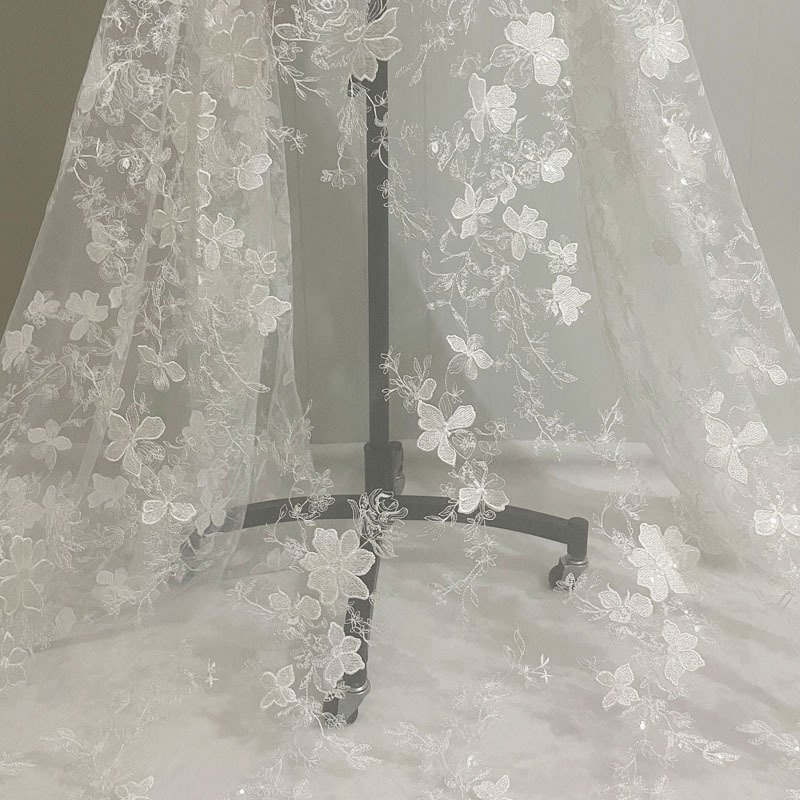
- Embroidered tulle: Designs stitched on mesh. Because motifs vary, it suits almost any area.
- Corded / Alençon: Motifs outlined with cord for depth. Consequently, it photographs well and shapes the body.
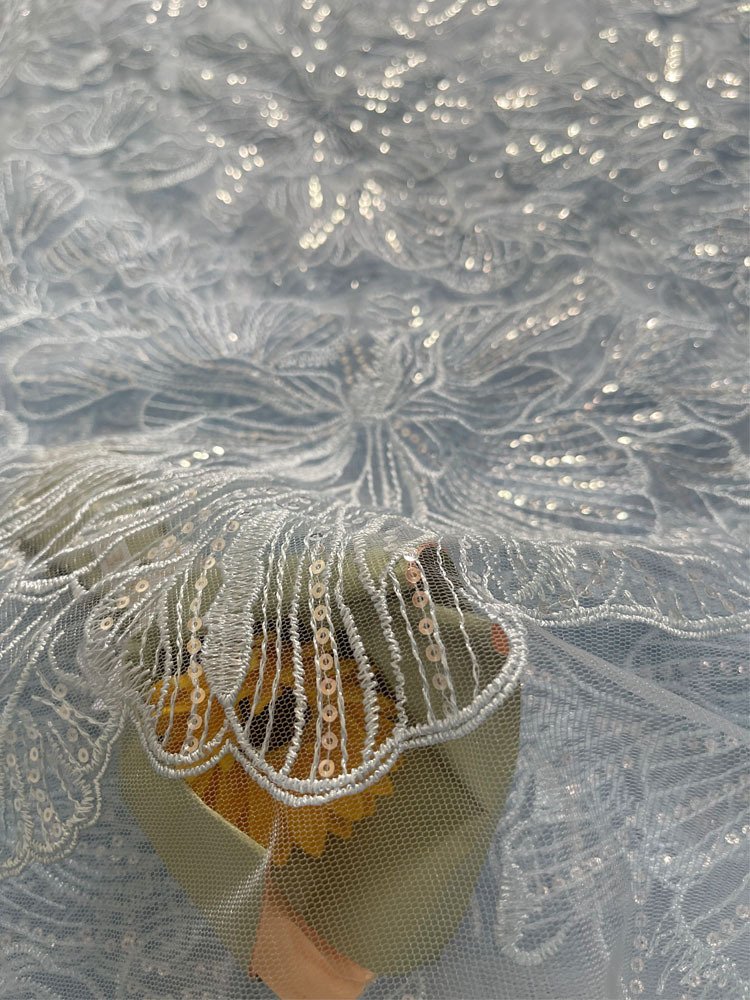
- Beaded/Sequined lace: Adds sparkle. Use on the bodice or a statement panel, then keep the rest clean.
- Stretch lace: A touch of elastane. Ideal for fitted sleeves or comfort panels.
3) Use the five-point quality check
These quick checks prevent surprises later.
- Weight & drape: Lift the lace and let it fall. If it collapses softly, it suits overlays; if it holds shape, it sculpts a bodice.
- Transparency: Place lining behind the lace. Then take a photo. If motifs pop, the contrast works.
- Hand feel: Rub on the inner arm. Scratchy edges will irritate a bride during a full day.
- Stretch & recovery: Gently pull 10%. Good lace rebounds; poor lace bags out.
- Edge finish: Scallops save finishing time. Straight edges are better for seam-to-seam panels.
Tip: Always pair the swatch with the real lining color you will use. Slightly warmer linings often make ivory lace look richer.
4) Fit fabric, trims, and appliqués together
Smart pairing reduces waste; it also speeds sewing.
- Fabric lace (130–150 cm width) for overlays, skirts, and long sleeves.
- Lace trims for hems, necklines, and waist accents—browse our current options in the Lotilace lace trim collections.
- Appliqués for focal points on bodice or train; place symmetrically to lift the design.
Moreover, try this cost-savvy combo: use an affordable embroidered tulle for the skirt, then upgrade impact with a premium corded trim on the hem.
5) Sampling and fit tests (15-minute routine)
Run these quick tests before you commit:
- Seam test: Stitch a 20 cm seam. Press gently. If holes spread, lower needle size.
- Lining test: Walk the lace over lining curves. If it ripples, switch to a lighter lining or add tiny clips.
- Wrinkle test: Scrunch, release, then hang two minutes. Good lace relaxes fast.
- Bead security (if any): Shake the swatch over paper. Falling beads mean you need a backup tack stitch.
- Photo test: Under phone flash and daylight. Details should stay crisp, not muddy.
6) Special notes for regional styles
Different markets prefer different looks. Therefore, adjust early.
- Western bridal: Soft Chantilly or corded lace over light ivory linings.
- Middle Eastern gowns & abaya: Denser motifs, gold thread, or bead accents. In addition, choose smoother backs to avoid snagging.
- Eveningwear: Black or jewel tones in guipure or sequined lace for clear drama.
If you need a broader fabric range for these styles, compare designs in our lace fabric catalog. You can filter by width, motif scale, and finish.
7) Sewing, care, and finishing
Good technique protects the dress and saves rework.
- Needles & thread: Microtex 60/8–70/10; fine poly thread to avoid puckers.
- Seams: Use narrow seams; trim bulk; hand-tack motifs that cross seams.
- Hems: Align scallops carefully; therefore, mark the fold line with basting first.
- Pressing: Low heat with a press cloth. Steam lightly; let the panel cool flat.
- Storage: Roll large motifs in tissue; avoid sharp folds.
Conclusion
With a clear plan, the right lace is easy to choose. First, define the design. Next, pick a type that matches the mood. Then run quick tests. As a result, you will deliver a gown that looks refined and feels comfortable all day.
At Lotilace, we combine classic motifs with modern production. Consequently, you get consistent quality, fast sampling, and reliable repeats.
Ready to source? Compare trims and fabrics above, or request samples and pricing through our contact page.